Gas Prices Are an Economy Killer Right Around The Corner
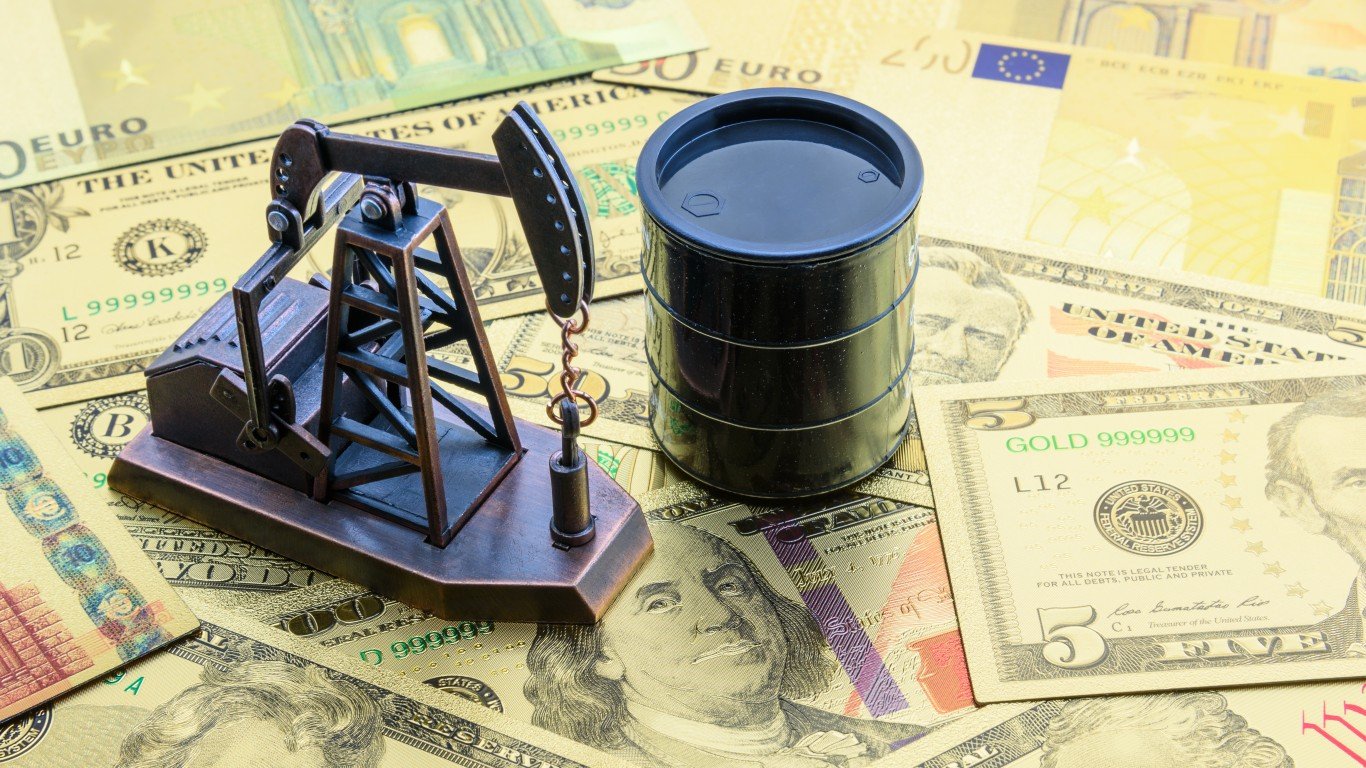
Doug McIntyre and a guest discuss the potential economic impact of high gasoline prices across the United States, particularly focusing on California. They explore how regional spikes in gas prices due to supply and demand issues, and possible future disruptions…

Doug McIntyre and a guest discuss the potential economic impact of high gasoline prices across the United States, particularly focusing on California. They explore how regional spikes in gas prices due to supply and demand issues, and possible future disruptions in the Middle East, might drastically affect the economy
Transcript:
$7 gas in California. Through a lot of the country, I understand it’s, you know, $340 to $375. In the Northeast where I am, it’s a little closer to $4.
California is always, along with Hawaii, the highest state. And part of that’s gas tax. Part of that is not supply and demand with oil or transportation.
But nevertheless, gas prices are among the biggest killers of the economy. So if that stays there and the rest of the nation starts to creep up uh what happens it won’t be good uh you know i was i i traveled to florida and from here in louisiana where gas is about i think i went by it today it was 315 317 in that ballpark when we went through mississippi it was down right about 299 or three dollars you know and kind of hovered all the way at that level into florida but I think there’s a good chance, especially if there’s a disruption in the Mideast with this ongoing battle, because the Israelis are going back in. They were just taking a breather.
And Lord knows what happens with Iran. But if there’s a spike there, the $7 in California could be $9.
Yeah, because I think if we go back now to June 2020… when Russia first basically started the invasion, oil went to $1.20.
Well, in June of 2022. 2022, right. In June of 2022, you had oil go to $1.20 and gas go to $5 nationally. So you’re right, in California, you were probably looking at $8.
People don’t also think about this. You’ve got heating oil. You’ve got diesel. So the whole trucking industry gets affected. Airlines get affected. People who use oil in their homes get affected.
And the thing that’s almost invisible to many, many Americans is petrochemicals. I mean, they forget that there’s a lot of stuff you use that’s made because you have the capacity to use oil.
This could be a real economy killer, couldn’t it?
Yeah, I think absolutely, because regardless of who you are, what you do or where you go, you have to have gasoline and you got to get there.
And for anybody, you know, that lives in a big metropolitan area, maybe not in the tri-state area where you live, because many people can commute from Connecticut and they’re in by train in places like Dallas.
or Houston or any place like that with far ranging suburbs where people have a 30 minute drive in or 40 minute drive in, 40 minutes back, yeah, it’s gonna be hard for a lot of people.
I don’t think people who take trains understand that at five, six, $7 gas, people could be paying hundreds of dollars more a month in gasoline.
Contact [email protected] for any questions or corrections.
Austin Smith is a financial publisher with over two decades of experience as an investor, analyst, and advisor. He covers stocks, ETFs, Artificial intelligence and personal finance for 24/7 Wall St. Previously, he spent over a decade at The Motley Fool as a senior editor for Fool.com, portfolio advisor for Millionacres, and launched The Ascent to help reader take control of their personal finances.
His work has been featured on Fool.com, NPR, CNBC, USA Today, Yahoo Finance, MSN, AOL, Marketwatch, and many other publications. He is as an advisor to private companies, and co-hosts The AI Investor Podcast with Eric Bleeker.
When not looking for investment opportunities, he can be found skiing, running, or playing soccer with his children. Learn more about Austin's investment approach here.