Elon’s Next Gambit Needs To Pay Off
Tesla’s recent earnings announcement was underwhelming, but interest spiked with Elon Musk’s promise of a $25,000 electric vehicle (EV) and the development of a robo-taxi, an autonomous vehicle requiring no human intervention. The conversation explores the potential impact of these…


Tesla’s recent earnings announcement was underwhelming, but interest spiked with Elon Musk’s promise of a $25,000 electric vehicle (EV) and the development of a robo-taxi, an autonomous vehicle requiring no human intervention. The conversation explores the potential impact of these developments on Tesla’s valuation and investor expectations, contrasting the tangible product of a lower-cost EV with the high-tech aspirations of AI-driven autonomous transport.
TRANSCRIPT: Tesla.
Tesla announced earnings.
Disappointing.
Very.
The only thing that got the stock to go up is that Elon Musk promised a $25,000 EV, which I think a lot of Wall Street analysts think if you’re at the $25,000 spot, the chances you can sell an EV go way, way up compared to $40,000 or $40,000.
$5,000 and Tesla sales had flattened.
So, you know, that’s, that’s their chance.
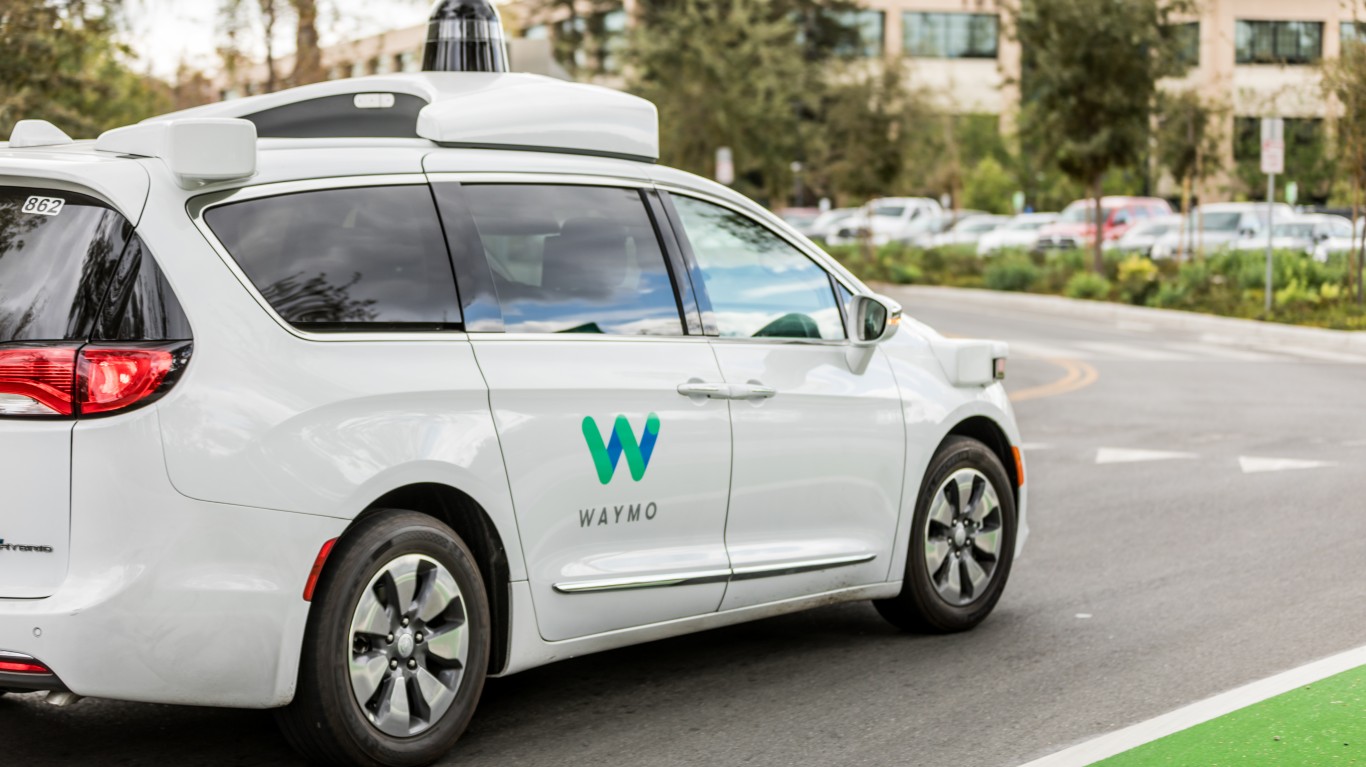
The other thing though, he keeps talking about is the robo taxi, which is presumably an independently driven car that doesn’t require human intervention.
Now there’s a big difference between these, these two announcements on his part.
A new car at $25,000 is a car.
If you’re a car company, you get a Ford valuation.
Robotaxi is AI-based software.
If you’re successful with that, you get a software valuation.
So where does this stand, Lee, when you look at those two options if you’re an investor?
Well, the stock has been absolutely pounded.
I mean, the last time I looked, it was down before this recent rally on the low ball pricing was down 30% this year, a little bit more.
And if he doesn’t deliver on, he’s got to deliver on one of the two, probably by the end of the year, I would think, or it could be a steep drop yet again.
Well, he’s promised the $25,000 car for next year.
Listen, he’s the greatest genius of not just his generation, but maybe a century.
But he does have one trait, and that is, I’m going to do this by such and such a date, and it ends up missing that by a year or two.
He does deliver the goods, but he delivers them much later than he indicated.
he would sell the Cybertruck, for example, just came out, it was very late.
First descriptions of that were years and years ago, the $25,000 car, if investors believe that’s coming, they’re not going to be able to see it for at least a year.
So that leaves the robo taxi and the what he calls his full self driving feature.
which the owner’s manual says, keep your eye on the road at all times.
That’s the AI play.
So the question is, does he get there with the robo-taxi or soon thereafter?
I guess on one of the two, like we said earlier, he’s got to deliver.
And the concept of the robo-taxi is probably good, and there’s probably other applications that it could do for delivery of all sorts of items or things of that nature, which probably is something he’ll put into the mix.
But I really think on the long haul for the car side, if he can deliver a $25,000 car, vehicle that people can truly afford that and again it’s not like 25 000 is cheap but it’s a lot more uh affordable for the average person than current models i think that would be huge and could really lift the stock but again it would be next year this time next year
Well, the robo-taxi play is an AI play.
One of the things that Tesla’s done a very good job of is using its own cars to some extent, collected gazillions of pieces of data about roads, barriers, lawns, all over the United States and other countries.
But to crunch that, you’re going to need some heavy-duty artificial intelligence software capacity.
So if clearly he knows a lot more about AI than people running other car companies, he needs to make that work.
He needs to have a car that can drive itself where the states are willing to approve it to go on their roads while you sit and eat a sandwich or read a book.
Contact [email protected] for any questions or corrections.
Austin Smith is a financial publisher with over two decades of experience as an investor, analyst, and advisor. He covers stocks, ETFs, Artificial intelligence and personal finance for 24/7 Wall St. Previously, he spent over a decade at The Motley Fool as a senior editor for Fool.com, portfolio advisor for Millionacres, and launched The Ascent to help reader take control of their personal finances.
His work has been featured on Fool.com, NPR, CNBC, USA Today, Yahoo Finance, MSN, AOL, Marketwatch, and many other publications. He is as an advisor to private companies, and co-hosts The AI Investor Podcast with Eric Bleeker.
When not looking for investment opportunities, he can be found skiing, running, or playing soccer with his children. Learn more about Austin's investment approach here.