Is the Nook the Canary in the Tablet Coal Mine?
Reuters has reported that Nook-related sales fell during the recent holiday season. With demand for tablets declining, Barnes & Noble, perhaps the weakest player, likely is a harbinger of things to come.

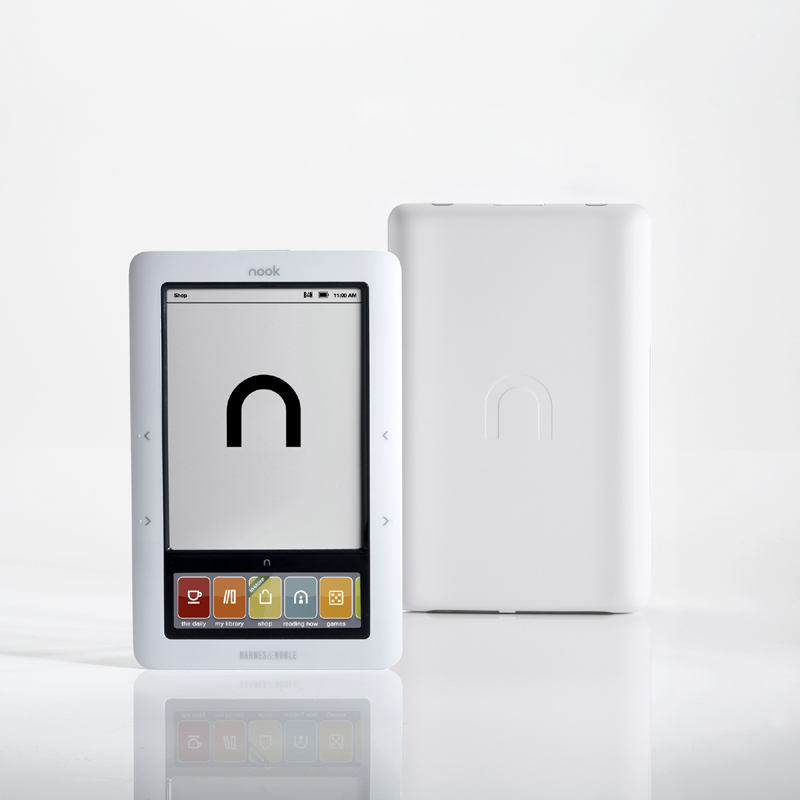 Barnes & Noble Inc. (NYSE: BKS) has confirmed that it has reduced staffing levels at the company, but it has not said how many people lost their jobs or in which areas of the company the cuts were made. Other reports indicated that the cuts were made in B&N’s Nook tablet unit as sales of the company’s tablet continue to decline. Reuters has reported that Nook-related sales fell 60.5% during the recent holiday season.
Nook was never really a threat to the Apple Inc. (NASDAQ: AAPL) iPad or the Kindle Fire from Amazon.com Inc. (NASDAQ: AMZN), which uses a proprietary version of the Android operating system from Google Inc. (NASDAQ: GOOG). Samsung, Sony, LG Electronics and other makers also use Android, and Microsoft Corp. (NASDAQ: MSFT) offers its Surface tablet with a version of its own Windows operating system.
What all these makers face is declining demand for tablets, and B&N, being perhaps the weakest player, is likely a harbinger of things to come. Research firm IDC reported in late January that fourth-quarter tablet sales grew to a total of 76.9 million units, up 28.2% year-over-year and 62.4% sequentially. That may sound good but it is not, according to IDC:
While the market’s growth rates remain impressive, they’re down dramatically compared to the year-over-year rates of the same quarter one year ago (87.1%) and indicate a significant slowing of the overall market.
Most tablets — 88% according to research firm NPD Group — are not purchased with a cellular connection. NPD also notes that even the 12% of tablets with cellular connectivity consume less data than an average smartphone.
What appears to be happening is that consumers are finding smartphones with five-inch screens serve most tablet purposes perfectly well. Tablets have never really caught on either as an adequate replacement for a laptop. Tablets may be consigned to becoming a single-purpose device that companies could use in place of laptops in some applications or for certain educational purposes or for some specific home uses. But as a general purpose computing and connectivity device, laptops and smartphones meet most consumers’ needs.
As we noted, being the weakest, Nook is likely to be the first to disappear. Tablets are also likely to disappear more quickly from the big Asian makers as they push cheaper and more versatile smartphones into new markets. If (when?) Apple releases an iPhone with a five-inch screen, the company risks cannibalizing its iPad sales. What Amazon will do with its Kindle Fire tablets is anyone’s guess.
Tablet sales have peaked and the sales decline has started. IDC’s research director said:
We expect commercial purchases of tablets to continue to accelerate in mature markets, but softness in the consumer segment — brought about by high penetration rates and increased competition for the consumer dollar — point to a more challenging environment for tablets in 2014 and beyond.
It was fun while it lasted.
Contact [email protected] for any questions or corrections.
Paul Ausick has been writing for 247Wallst.com for more than a decade. He has written extensively on investing in the energy, defense, and technology sectors. In a previous life, he wrote technical documentation and managed a marketing communications group in Silicon Valley.
He has a bachelor's degree in English from the University of Chicago and now lives in Montana, where he fishes for trout in the summer and stays inside during the winter.
