Tech Company CEOs Who Laid Off Workers but Kept Their Jobs
Tech companies have laid off hundreds of thousands of workers but their chief executives have not been fired or resigned.

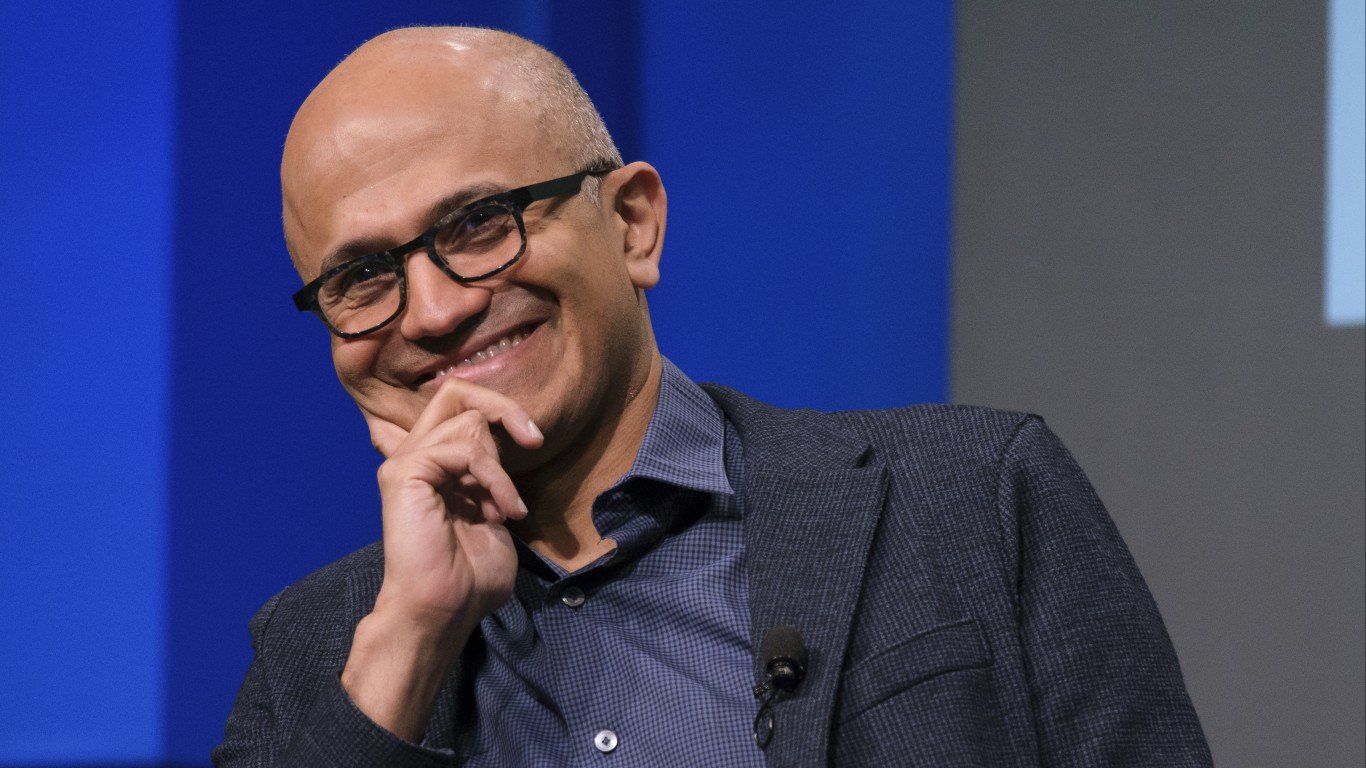
Tech companies have laid off workers at a rate reaching hundreds of thousands combined. Their chief executive officers give two primary reasons for this. The first is that the economy is weak. The second cousin to this is that they added too many people over the past five years as their businesses boomed. (Click here for the American tech companies that laid off the most people last year.)
Interestingly, Apple, the best-run and most successful tech company, has not cut any jobs. It did not “overhire,” and there is no indication that economic headwinds will hurt its revenue.
Another hallmark is that the companies that have laid off their workers have not fired their CEOs, nor have any of these CEOs resigned. This is even though they often claim they are to blame for hiring too many workers.
Most companies, or the larger ones, have cash hoards and positive cash flow. Their CEOs make millions, if not tens of millions, a year. They could keep workers in place for the next boom, which almost all these companies assume will happen after the economic downturn.
Under new CEO Elon Musk, Twitter has laid off thousands of workers. At least he has a huge investment in the company and appears to take no compensation.
Alphabet, Amazon, Meta and Microsoft, considered America’s most powerful tech companies, along with Apple, have laid off tens of thousands.
Some smaller companies have laid off nearly as many people in combination. These include Adobe, HP, Intel, Salesforce, SmartNews, Spotify and Zillow.
What happens to the tech industry next? First, it is permanently crippled. Perhaps there are too many competitors today, and they steal too much revenue from one another. That assumes the global market for tech goods and services will not grow again. The much more likely outcome is that tech sales will rise, probably quickly, once the downturn is over. At that point, the companies can add tens of thousands of jobs back, although probably not the most recently fired people.
Contact [email protected] for any questions or corrections.
Douglas A. McIntyre is the co-founder, chief executive officer and editor in chief of 24/7 Wall St. and 24/7 Tempo. He has held these jobs since 2006.
McIntyre has written thousands of articles for 24/7 Wall St. He is an expert on corporate finance, the automotive industry, media companies and international finance. He has edited articles on national demographics, sports, personal income and travel.
His work has been quoted or mentioned in The New York Times, The Wall Street Journal, Los Angeles Times, The Washington Post, NBC News, Time, The New Yorker, HuffPost USA Today, Business Insider, Yahoo, AOL, MarketWatch, The Atlantic, Bloomberg, New York Post, Chicago Tribune, Forbes, The Guardian and many other major publications. McIntyre has been a guest on CNBC, the BBC and television and radio stations across the country.
A magna cum laude graduate of Harvard College, McIntyre also was president of The Harvard Advocate. Founded in 1866, the Advocate is the oldest college publication in the United States.
TheStreet.com, Comps.com and Edgar Online are some of the public companies for which McIntyre served on the board of directors. He was a Vicinity Corporation board member when the company was sold to Microsoft in 2002. He served on the audit committees of some of these companies.
McIntyre has been the CEO of FutureSource, a provider of trading terminals and news to commodities and futures traders. He was president of Switchboard, the online phone directory company. He served as chairman and CEO of On2 Technologies, the video compression company that provided video compression software for Adobe’s Flash. Google bought On2 in 2009.